From archetypes to poetic language: a journey through the collective unconscious to discover that our identity is the node of a universal symphony.
By Ana Rosa Rodríguez
HoyLunes – We live surrounded by signs, yet we rarely stop to interpret symbols. We believe ourselves to be the solitary architects of our thoughts, masters of an impenetrable individuality; however, beneath the surface of our consciousness flows a much older and deeper current.
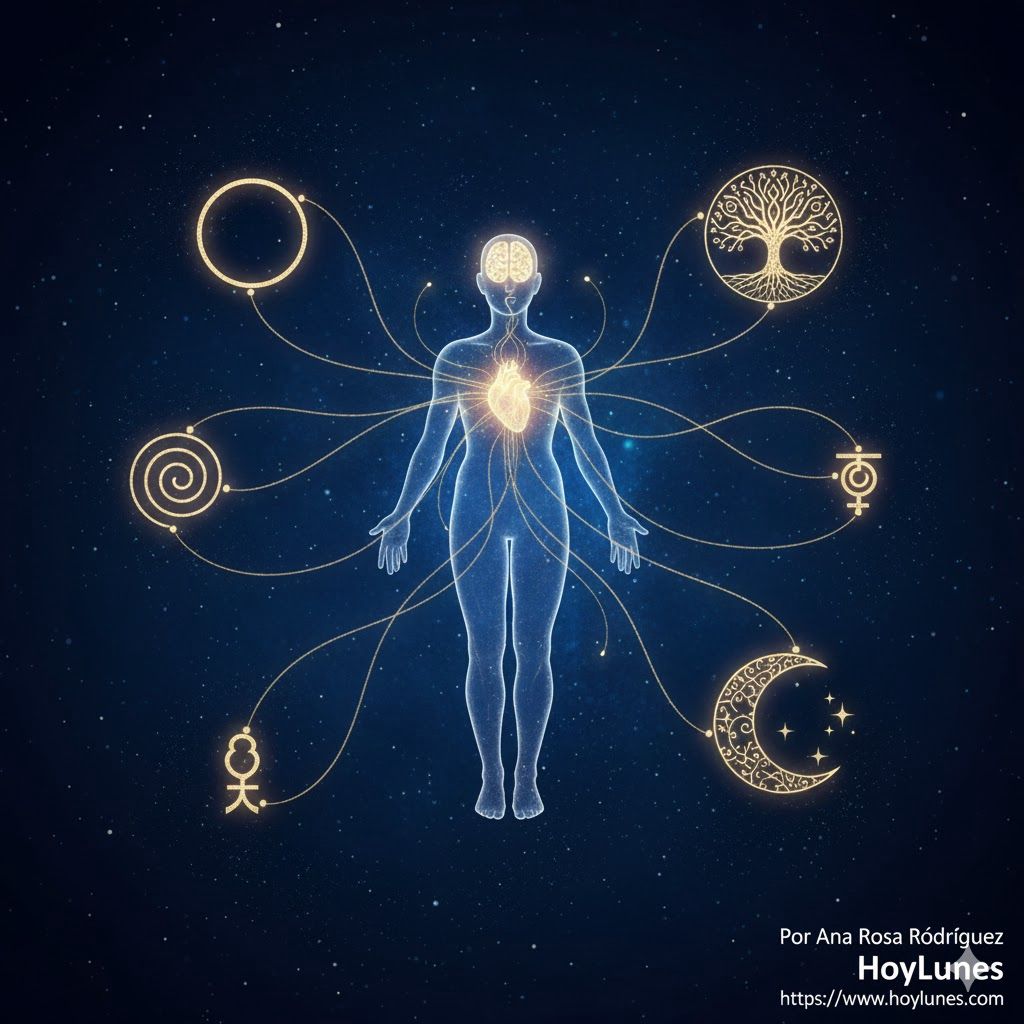
In his posthumous work, “Man and His Symbols“, Carl Jung did not merely leave us a psychological treatise, but the map of an invisible web that connects us across centuries, cultures, and dreams. Long before the era of digital hyper-connectivity, Jung understood that humanity was already united by an invisible infrastructure: the collective unconscious.
Unlike signs, which simply point to something concrete, symbols are portals. A circle, a cross, or the figure of the hero are not mere cultural inventions produced by chance or coincidence; they are the nodes of a network of archetypes that give shape to our deepest fears, desires, and aspirations. Exploring Jung’s work today is not just an academic exercise; it is a necessity to understand why, despite our geographical or ideological differences, we continue to react to the same primordial images in a common language spoken not only with the tongue, but with the soul.
Jung argued that human beings cannot live on logical certainties alone. This is where narrative and poetry acquire significant relevance between the information of signs and the meaning of symbols, articulating them as the great connectors of the depth and beauty of the human experience that expresses itself and leaves traces.

When a poet speaks of night, rain, or twilight, or a novelist describes the “descent into a cave,” the “slope of the road,” or “the passion of a night,” they are not using signs, but symbols. These function as an emotional fiber-optic network; they transport a vast amount of psychic information that literal words cannot contain.
The true magic of literature and poetic language lies in its capacity to dissolve the distance between the “I” and the “Other.” In this sense, signs and symbols, as mental representations, constitute a kind of chain in the universal connection. Recognizing, for example, the symbol of the “Mother,” the “Wise Old Man,” the “Shadow,” the rain, the wind, or the “dark night” happens not because we have been taught to, but because they resonate within our deep psychic structure. This is the representative interconnected web that can be common to the thought of a collective.
In human connection, we see how poetry, for instance, does not explain pain; it symbolizes it. In doing so, it creates a common space where the author and the reader, separated by centuries or miles, meet at the same point in the network, in a common thought emanating from a shared sentimental matrix.
Jung suggested that the artist is not just a creator, but a vehicle. Poetic language takes the raw images of the unconscious and translates them into symbols that society can process. It is then that the poet becomes an interpreter of the unconscious world, visiting other realms even if they have never physically been there.
This contribution by Jung suggests the idea of binding linguistic technique with the spiritual transcendence of the transpersonal vision and deep analytical psychology, focusing on that transition from the limited “Ego” toward the totality of the “Self”—the center of the personality that encompasses both consciousness and the unconscious.
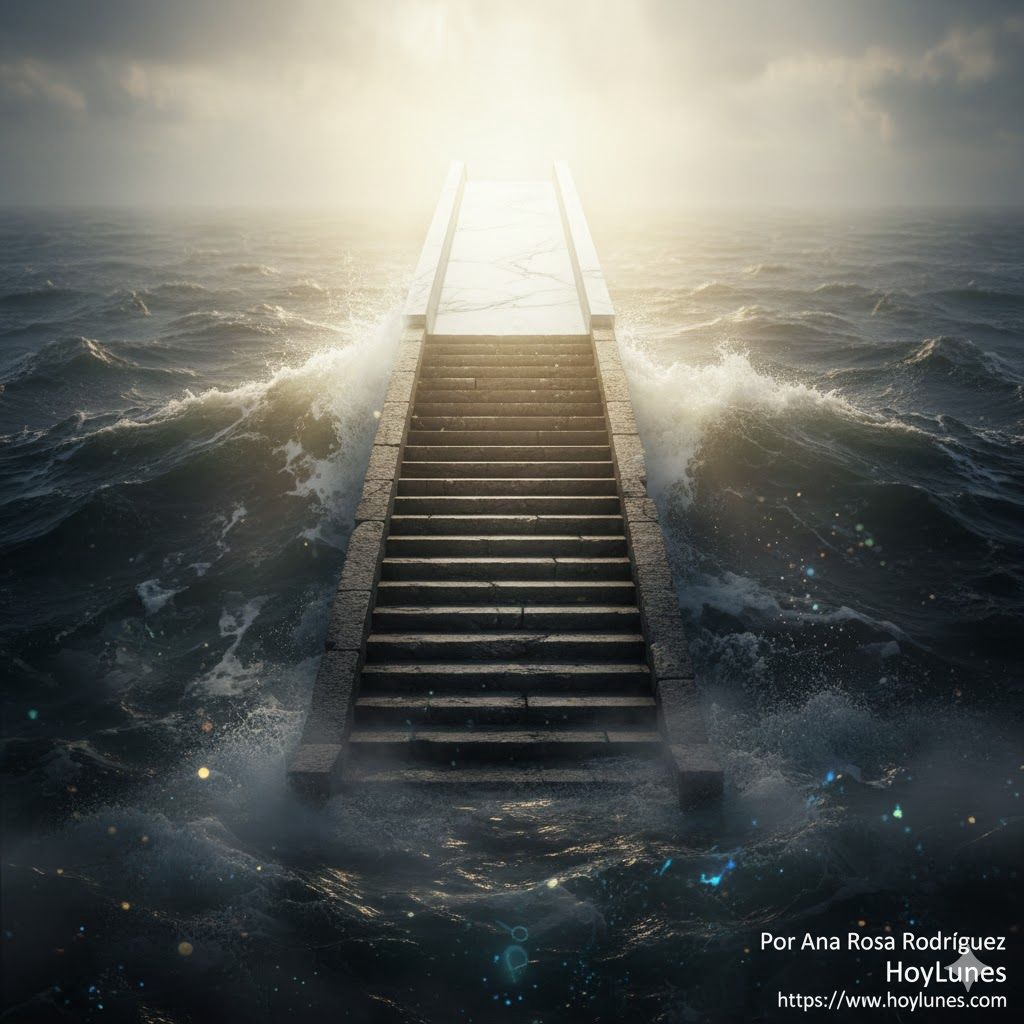
The journey Jung proposes through symbols culminates in an ambitious destination: “individuation”. This process is nothing other than the bridge an individual crosses from their “Ego” (that small island of consciousness and ego) toward the fullness of the “Whole.” By understanding narrative and poetry as this “invisible web,” we realize that every symbol that resonates within us is proof of our connection to the totality of the human psyche. Jung teaches us that man is not complete as long as he ignores his symbolic roots.

Fullness is achieved when the “I” ceases to see itself as an isolated entity and recognizes itself as a vital node within an infinite web of shared meanings. By reconnecting with the poetic language of the unconscious, we not only find ourselves, but we discover that we have never been alone; we are part of a sacred and universal architecture.
By rebuilding that mirror through poetic l anguage and the acceptance of the subconscious mind’s content, the score of this journey suggests we cease being a solitary note and become part of the cosmic symphony, where the whole takes on its true meaning. In the heart of one’s own psyche, the melody of the echo of all humanity resonates, thus satisfying the human need to connect with something that transcends temporary biological existence.
All of this implies moving toward the individuation of one’s own identity, toward personal self-actualization and the transcendence of being, through the harmonious integration of the individual essence with the collective purpose. This transforms every symbol into an expression of conscious totality, understanding that mental health and personal success stem from the conscious mind and both the individual and collective unconscious working together, rather than in confrontation and conflict.
May poetic and literary productions in general, which symbolize the creative essence of human interconnection, interweave linguistic elements that can star in the plot of episodes shared heart to heart. Let us fill the planet with art, symbols, and living languages, with a nurtured narrative where lives take center stage without bruising or burning one another, maintaining our own essence while flowing with the cadence of our deepest desires.
The final reflection invites us to see ourselves as a human network or tapestry, where we are all interconnected, creating the world and life itself. In this sense, we have the capacity to choose the meanings we attribute to the vital experience to give it meaning and belonging:
“We are not what happens to us; we are what we choose to be through the symbols that inhabit us”.

#hoylunes, #ana_rosa_rodríguez, #el_hombre_y_sus_símbolos, #carl_jung,